Debt Payoff Calculator
Plan and simulate your visual debt-free timeline
Last updated: August 2026
Step 1: Your Active Debts
Add cards, loans, mortgages, or any active liabilities you want to clear.
Step 2: Choose Strategy & Budget
Select Payoff Strategy
Step 3: Payoff Dashboard
Remaining Balance Amortization Chart
Month-by-Month Amortization Details
| Month | Debt Name | Start Balance | Payment | Interest | Principal | End Balance |
|---|
Debt Payoff Calculator: Snowball vs. Avalanche, and How to Actually Pick One
A debt pay-off calculator helps you determine how to get out of debt as quickly as possible. If you have multiple loans and want to know when you will be debt-free—or how much sooner you could clear your debt by making extra payments—our tool calculates exactly how many months or days you could save. Banks often prefer that you make only the minimum payment so they can continue earning interest for years; our calculator helps you decide whether it is better to pay off a smaller loan first or one with a higher interest rate.
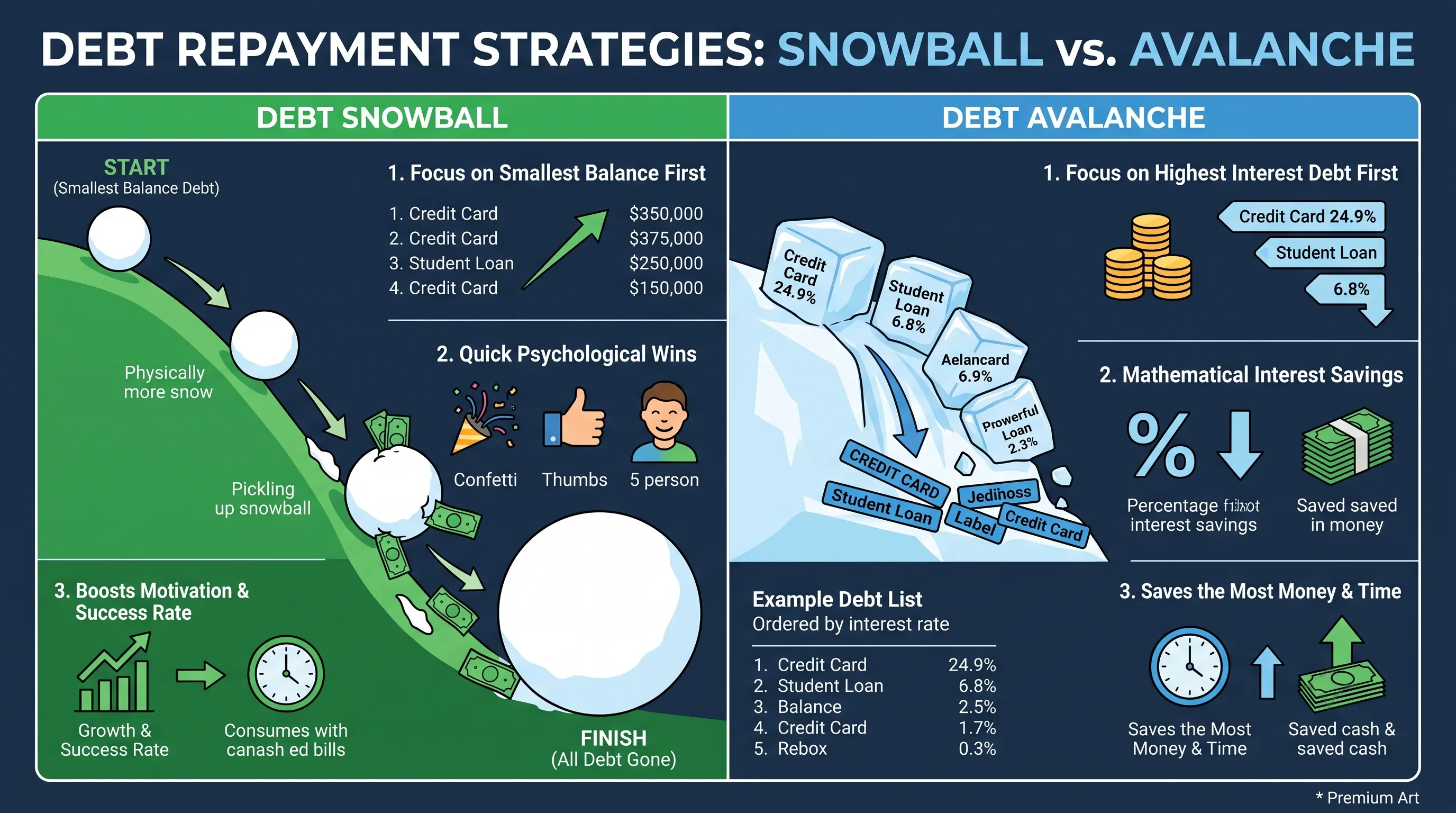
Snowball vs. Avalanche: The Two Methods Everyone Talks About
Finance experts advise on the best ways to pay off your credit card and bank loans. There are only two methods in the world to repay loans easily. Let's understand them in detail now.
Snowball Method
This approach is rooted in psychology and helps build your confidence by clearing smaller loan amounts first. The downside of this method is that you will end up paying bank interest for a longer duration.
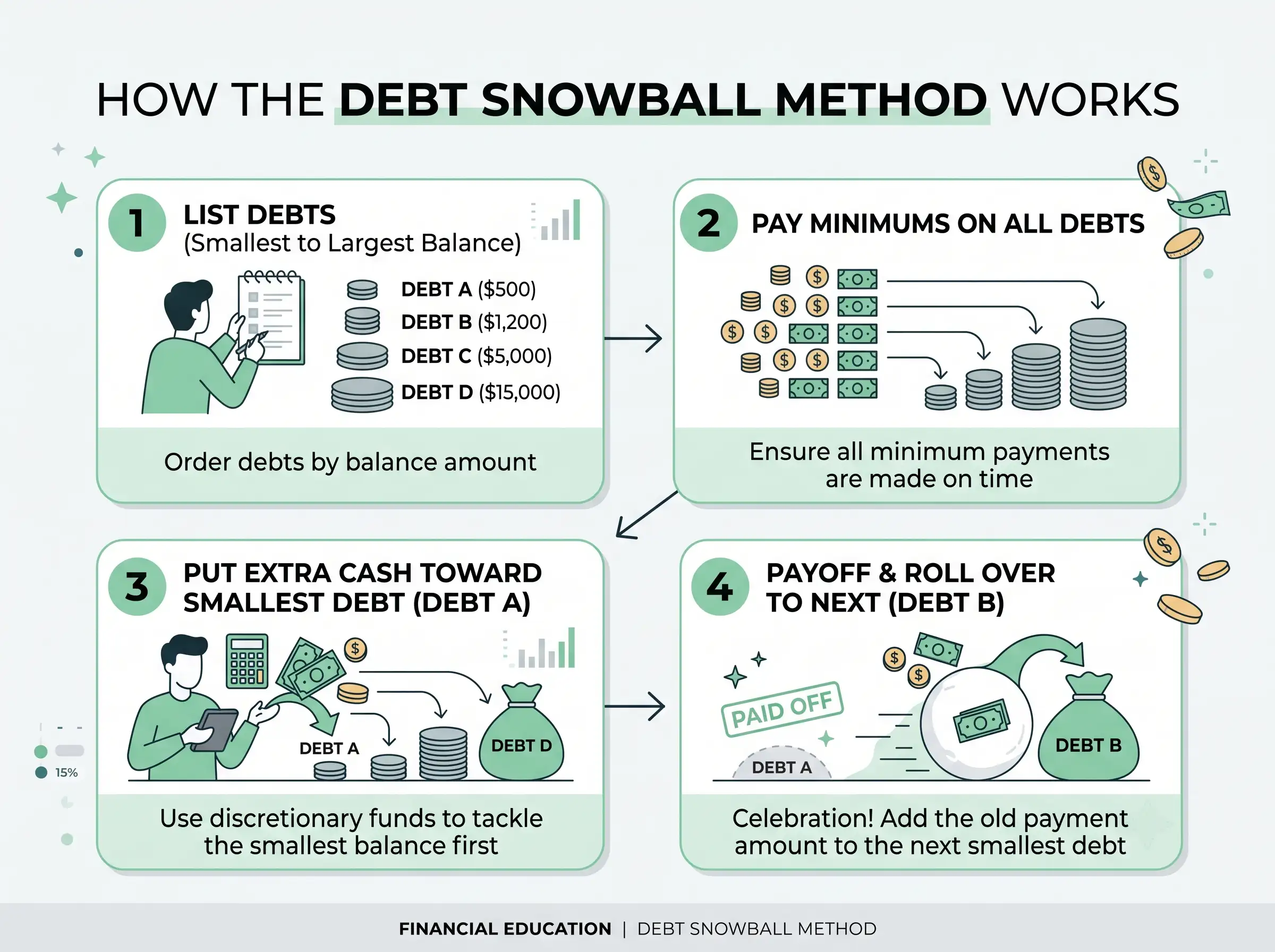
How Snowball Method Works
Disregarding interest rates, list your debts from the lowest balance to the highest. Pay the minimum on all accounts and put any extra money toward the lowest balance debt. Once it is paid off, add that payment amount to the next lowest debt.
Disclaimer: This approach is not mathematically ideal and could lead to paying more interest in the long run.
Avalanche Method
This method is considered good because it uses math and helps you save money. It targets the loan that is hurting you the most, meaning the one with the highest interest rate.
How Avalanche Method Works
List all your loans from highest to lowest interest rate. Pay the minimum on all of them, then put any extra money toward the one with the highest rate. When that one is paid off, repeat this process for the next highest.
However, you don't need to do all these calculations manually. Our debt payoff calculator is designed specifically to make the process easier for you.
How to Use This Debt Payoff Calculator
- Step 1 – Your Active Debt: List your active loans—such as car loans, student loans, and credit card debt. Select the loan type, enter the loan name, total balance, APR, and minimum payment.
- Step 2 – Choose Strategy and Budget: Choose your method: Avalanche, Snowball, or Minimums Only. Then set your total monthly budget and any additional extra payment. You can also add a one-time lump sum payment on a specific date.
- Step 3 – See Your Results: Instantly view your debt-free date, total interest paid, a side-by-side comparison between Snowball and Avalanche, and your month-by-month repayment schedule.
If you're paying off debt in a currency other than USD, this calculator also supports GBP, EUR, CAD, AUD, and INR.
Which Debt Should I Pay Off First?
Step 1: The First and Most Important Thing
Rule: Before focusing on a single loan, pay the minimum due on all your debts on time every month. Missing even one EMI results in heavy late fees from the bank and damages your credit score.
Step 2: Pay Off ‘Dangerous’ Debts First (Danger Zone)
Rule: If you have any debt that could cause legal trouble or is incurring heavy daily penalties (like outstanding taxes or payday loans with 100-200% interest), put all extra money towards it first.
Step 3: Choose Your Core Strategy
Once dangerous debts are managed, pick one of the two proven methods for your standard loans:
| Feature | Snowball (Psychology) | Avalanche (Math) |
|---|---|---|
| Target | Smallest balance first | Highest APR first |
| The Rest | Minimums on all others | Minimums on all others |
| Biggest Pro | Quick wins & motivation | Minimizes total interest |
| Best For | Building early momentum | Saving maximum money |
Step 4: The ‘Lump Sum’ Cheat Code
Rule: Whenever you receive a large, unexpected sum of money (like a bonus or tax refund), apply it to your loan immediately. 100% of this money goes directly toward reducing principal, cutting years off your debt timeline.
Conclusion: If you are unsure which method to pick, the Snowball method (smallest loan first) is great for building initial momentum with small wins.
What Is the Formula For Calculating Debt Payoff?
Every month, standard debt payoff math follows three clear steps:
How to Calculate Your Debt-Free Month (Worked Example)
Suppose you have a $1,000 balance at an 18% annual APR (1.5% monthly) and pay $200 each month:
| Month | Start Balance | Interest (1.5%) | Principal | New Balance |
|---|---|---|---|---|
| Month 1 | $1,000.00 | $15.00 | $185.00 | $815.00 |
| Month 2 | $815.00 | $12.23 | $187.77 | $627.23 |
| Month 3 | $627.23 | $9.41 | $190.59 | $436.64 |
| Month 4 | $436.64 | $6.55 | $193.45 | $243.19 |
| Month 5 | $243.19 | $3.65 | $196.35 | $46.84 |
| Month 6 | $46.84 | $0.70 | $46.84 | $0.00 |
Time to completely pay off = 6 months.
Frequently Asked Questions
Is the Snowball or Avalanche method better for paying off debt?
Mathematically, the Avalanche method saves more money because it eliminates highest-interest balances first. The Snowball method offers greater psychological motivation by delivering rapid initial wins.
Can I use this specifically to calculate credit card debt?
Yes. You can enter credit card balances individually or alongside personal loans, auto loans, and mortgages for a full consolidated picture.
Does paying an extra amount each month make a significant difference?
Yes. 100% of extra payments reduce the principal directly, reducing future interest charges and shortening repayment by months or years.
Is this debt payoff calculator free to use?
Yes, completely free with no signup required, supporting USD, GBP, EUR, CAD, AUD, and INR.
How do I find my debt free date?
Add each debt with its balance, interest rate, and minimum payment, then enter how much you can pay in total each month. The calculator runs your plan month by month and shows the month you become debt free and the total interest you pay, for the Snowball, Avalanche, and minimums-only plans side by side.
Can I pay off multiple credit cards at once with this calculator?
Yes. You can add as many credit cards and loans as you need. The calculator pays the minimum on every card, then sends your extra money to one target card at a time. When that card is paid off, its payment rolls into the next one, which is how both the debt snowball and debt avalanche methods pick up speed.
Which debt should I pay off first?
If you want to save the most money, pay off the debt with the highest interest rate first (the avalanche method). If you need quick wins to stay motivated, pay off the smallest balance first (the snowball method). Either way, keep paying the minimum on every other debt so you avoid late fees and credit damage.
The Bottom Line
Neither method is one-size-fits-all—the best repayment plan is the one you can stick to consistently until every balance reaches zero. Use the calculator above to run your numbers and start your debt-free journey today.
All financial formulas and debt strategies are calculated in accordance with standard personal finance rules.